You do not need a spec — you need clarity
Many business owners delay a software project because they think they need a formal specification first: a long document full of requirements, screens, and technical terms. They do not. A heavy spec written by someone who is not technical often does more harm than good, because it locks in guesses about how the software should work before anyone has thought hard about the problem.
What a good build actually needs from you is clarity about the problem, not a design for the solution. If you can explain what is painful today, show real examples, and describe what a better outcome looks like, a capable team can turn that into the right product. This guide covers exactly what to bring, in plain language, so the work can start quickly and accurately.
Describe the problem in normal words
Start with what is currently painful, told as a story rather than a list of features. Who is involved, what do they do, where does the work slow down, and what happens when something goes wrong? Resist the urge to translate this into technical requests — "we need a dashboard" hides the real problem, while "the manager spends every Monday morning chasing numbers from three people" reveals it.
A simple way to do this is to walk through a recent real example from start to finish. Pick one actual customer, order, or request from last week and narrate everything that happened to it: who touched it, what they did, how long each step took, and where it got stuck. One concrete story exposes more useful detail than pages of abstract requirements.
Bring examples from real work
Artifacts from how you work today are often more valuable than any document you could write specially for the project. They show the real workflow and expose details that are easy to forget in conversation — the awkward field everyone hates, the copy-paste step between two tools, the message everyone sends slightly differently.
Gather whatever you already have. None of it needs to be tidy; the messiness is informative.
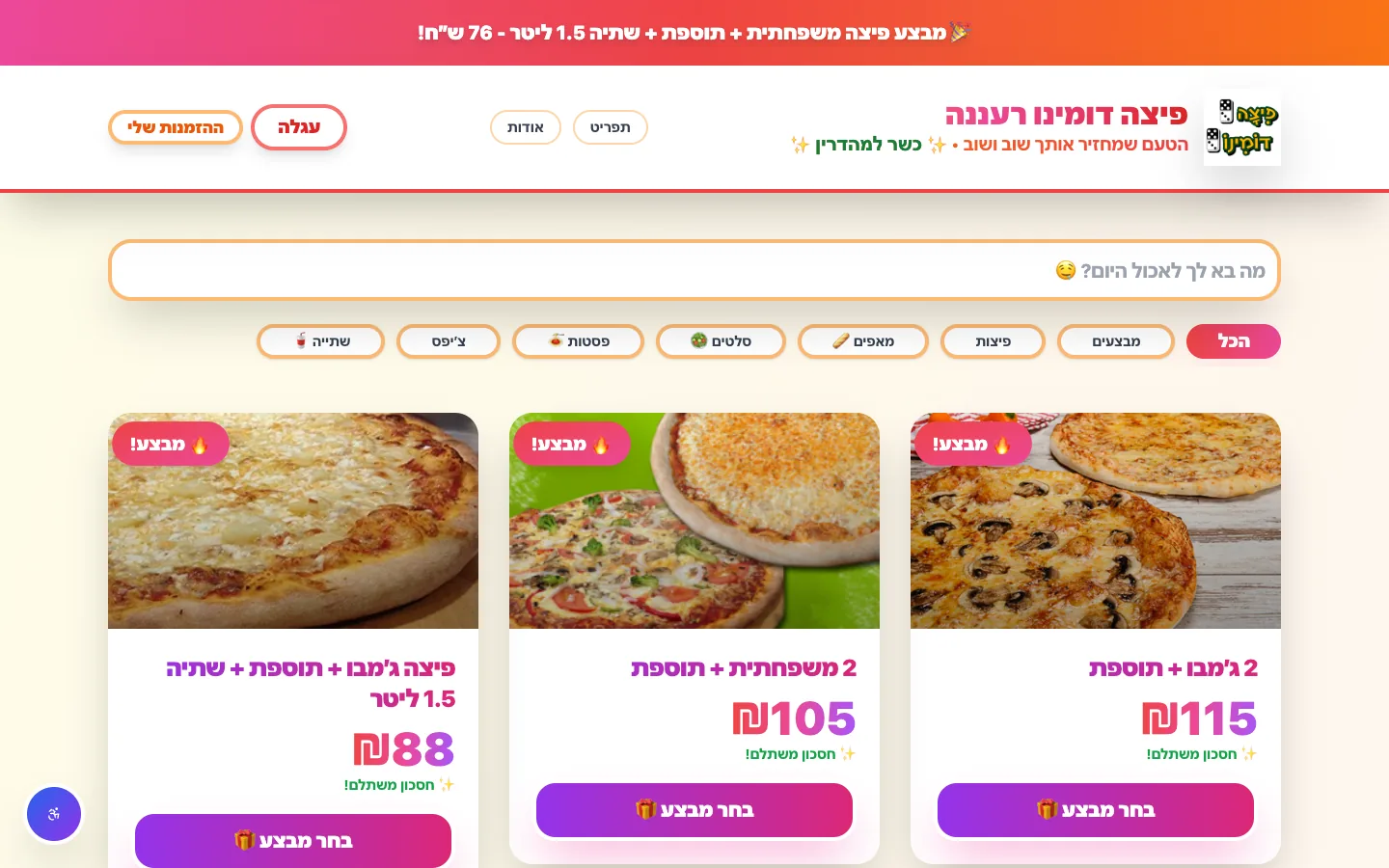 Real build exampleHow Domino Ra'anana's build started from real ordersThe build was scoped from how orders actually arrived at the restaurant — menu, cart, delivery zones, payment, kitchen handoff — not from a feature list. That is what a good brief looks like in practice.Built in about 2 months · live at domino-rn.co.il
Screenshots and spreadsheets
The actual tabs, files, and tools the team uses now, including the messy ones.
Message and email templates
What you send to customers and each other, so the system can match your real tone and steps.
Forms and documents
Any intake forms, checklists, or paperwork that capture the information you rely on.
Examples of things going wrong
A booking that was lost, a duplicate order, a missed follow-up — these reveal the edge cases that matter most.
Name the outcome, not just the feature
When you do describe what you want, anchor it to the change you expect rather than the mechanism. Instead of "we need a dashboard," say "the manager should be able to see which jobs are behind without asking anyone." Instead of "send reminders," say "fewer customers should miss appointments." The outcome tells the team what success looks like and leaves room for them to find the simplest way to get there.
This matters because the obvious feature is often not the best solution. A team that understands the outcome might solve the problem with something smaller, cheaper, or more reliable than the feature you first imagined. Stating outcomes also gives you a clear way to judge the result later: you can check whether the number you cared about actually moved.
Know your constraints and your non-negotiables
A few practical facts help a project start on solid ground. What tools must the new system work alongside — your calendar, accounting software, CRM, or payment provider? Are there rules you cannot break around privacy, data, or how customers are contacted? Is there a real deadline, like a busy season, that shapes what version one must include?
It also helps to separate what is essential from what is merely nice. If you can mark which parts of the workflow are non-negotiable and which are flexible, the team can protect what matters while simplifying everything else. Constraints are not obstacles to a build — knowing them early is what prevents expensive surprises later.
Decide how you will judge the first version
Before anything is built, agree on what a successful first version would let you stop doing manually, or what number it should improve. This single decision keeps a project focused and honest. It prevents scope from drifting, gives everyone the same definition of done, and makes the eventual result easy to evaluate without arguments.
You do not need metrics dashboards for this. A plain sentence is enough: "if this works, we stop spending Monday mornings chasing status," or "if this works, no-shows drop noticeably within a month." Arrive with the problem, the examples, the outcomes, the constraints, and this measure of success, and you are far better prepared than most clients who show up with a thick spec.
Frequently asked questions
How much time should I spend preparing?
A few focused hours is usually enough: one hour narrating a real recent example from start to finish, one hour gathering screenshots, templates, and forms, and one hour writing down outcomes and constraints. That preparation routinely saves weeks of back-and-forth later.
What if I don't know what is technically possible?
You do not need to. Describe the outcome you want in plain words and let the team propose the mechanism. Guessing at technical solutions before the conversation usually anchors the project on the wrong feature.
Should I sign an NDA before sharing my workflow?
For most operational workflows the risk of sharing is low and the cost of secrecy is high — vague briefs produce vague quotes. If the idea itself is genuinely novel, a simple mutual NDA is a reasonable ask and any serious builder will sign one.
About the author
Ohad Mayrom — Founder, WizeApps
Ohad Mayrom is the founder of WizeApps, where he designs and builds booking systems, client intake flows, internal operations tools, and MVPs for small businesses and early-stage founders. He writes plain-language guides to help non-technical owners commission software with confidence.
Connect on LinkedInKeep reading
Thinking about building this?
Tell us what is not working yet. A few clear examples of the current workflow are enough to start a useful conversation.
Start a conversation